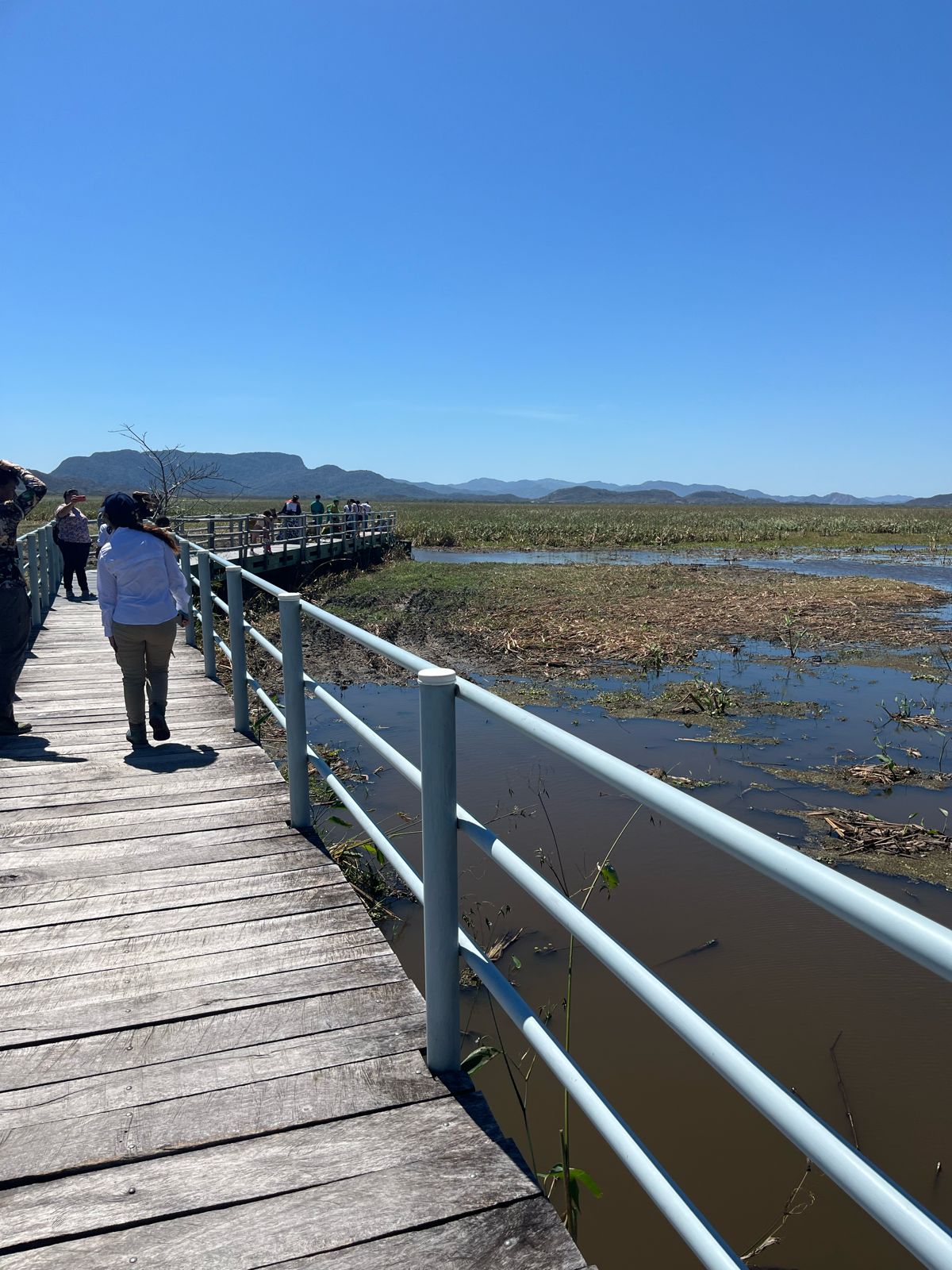
Costa Rica has around 350 wetlands, equivalent to 307,000 hectares. These ecosystems are of great importance to the planet because they capture up to five times more CO2 than forests on dry land. Additionally, they serve as a natural barrier against erosion, protecting coasts and riverbanks, and they are habitats for the reproduction of wildlife and aquatic life.
For the past five years, Cementos Progreso Costa Rica has contributed to mangrove restoration and conservation within the «Cipancí» wildlife refuge. This allows for fostering the social and economic benefits it provides to surrounding communities through its care and improvement. Birdwatching tourism, and the commercialization of various species of mollusks and fish, are some of the sustainable practices that community members engage in at the park.
To date, approximately 250 girls and boys have been positively impacted by talks on biodiversity and the role of wetlands in ecosystems. This year, Cementos Progreso Costa Rica will support the restoration of 20 sites (former shrimp farms and salt flats), as well as the continuous and accurate carbon capture measurement of these important ecosystems.
Luis Baltodano, Quality and Environment Manager at Cementos Progreso Costa Rica, commented on the importance of caring for these ecosystems. «Wetlands form a natural barrier against natural disasters, stop erosion, and capture carbon, a vital action in the fight against climate change. Taking care of and protecting these spaces is everyone’s responsibility because they provide important benefits. For example, mangroves are the cradle of mollusks, clams, and shrimp, which in turn are essential species for local economies,» he stated.
Wetlands and Human Welfare
Wetlands are characterized by their scenic beauty, but above all, they serve as natural filters that absorb and retain sediments and nutrients to improve water quality and prevent pollution.
During the rainy season, they function as temporary storage areas, leading to the presence of unique hydrological conditions. Moreover, they help to prevent floods as they can absorb and release water gradually.